
Vole activity can cause significant lawn and garden damage throughout Calgary, Airdrie, and surrounding communities during summer 2026. Although much of the damage becomes visible after snow melts, voles remain active throughout the warmer months. They continue feeding, nesting, and creating shallow pathways beneath grass, mulch, ground cover, and dense vegetation.
For vole problems 2026, homeowners often mistake vole damage for drought stress, insects, poor soil, or general lawn wear. Early identification is important because an active population can continue damaging grass, plants, shrubs, and young trees throughout the season.
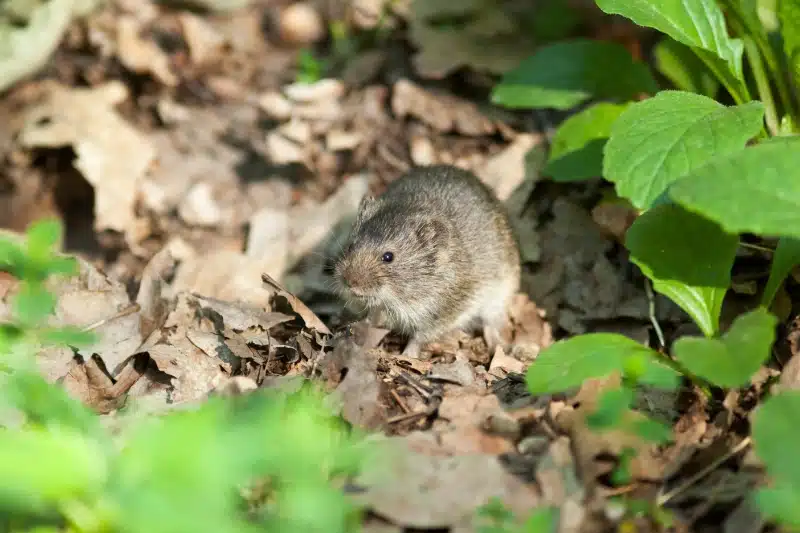
Voles are small rodents with compact bodies, short tails, rounded ears, and blunt faces. They are sometimes called field mice, but they are not the same as house mice. Voles usually remain outdoors and prefer areas with thick grass, shrubs, mulch, weeds, and low ground cover.
They create networks of shallow tunnels and surface runways that allow them to move between feeding areas and nesting sites. These pathways may become visible as narrow, pressed-down trails through the lawn.
Voles reproduce quickly when food and shelter are available. A small population can increase within a short period, especially in areas with dense vegetation and limited predator activity.
The most common sign of vole activity is a network of narrow trails across the lawn. These trails may appear as flattened grass, shallow grooves, or areas where the turf has been worn away. The pathways often branch in several directions and connect burrow entrances, shrubs, garden beds, fences, sheds, and decks.
Small burrow openings may also appear near the base of plants, along foundations, beneath shrubs, or beside hard landscaping. These openings are usually surrounded by clipped grass, droppings, or plant material.
Voles may chew bark from the base of young trees and shrubs. This damage can be especially serious when the bark is removed around most or all of the trunk. Girdling interrupts the flow of nutrients and may kill the plant.
Other warning signs include damaged roots, missing bulbs, clipped vegetation, and disturbed mulch. Garden plants may wilt or collapse when voles feed on roots below the surface.
Summer lawns provide food, shelter, and protection from predators. Long grass, heavy mulch, overgrown garden beds, and dense ground cover allow voles to move without being easily seen.
Irrigated lawns may also support more plant growth, creating a reliable food source during dry periods. Properties near open fields, drainage areas, green spaces, or undeveloped land may experience more activity because voles can move easily between natural habitat and residential yards.
Voles do not create raised soil mounds like pocket gophers. Their damage is usually closer to the surface and appears as runways, shallow tunnels, damaged vegetation, and small openings.
Correct identification is necessary before treatment begins. Voles, moles, and pocket gophers cause different types of damage and require different control methods.
Voles create surface runways and small burrow openings. They feed on grass, roots, bark, seeds, bulbs, and other plant material.
Moles primarily feed on insects and earthworms. Their tunnels often create raised ridges across the lawn.
Pocket gophers produce larger mounds of loose soil and spend most of their time underground. They damage plants by feeding on roots and pulling vegetation into their tunnels.
Treating the wrong animal wastes time and may allow the damage to continue.
For vole problems 2026, property maintenance can reduce shelter and make the yard less attractive to voles. Grass should be kept trimmed, especially along fences, sheds, decks, foundations, and garden edges. Weeds and dense ground cover should be removed from areas showing regular activity.
Mulch should not be piled directly against tree trunks or foundations. Thick mulch provides cover and may hide burrow openings. Keeping a clear space around the base of trees can make activity easier to detect.
Wood piles, stored materials, fallen branches, and yard debris should be removed or raised off the ground. These areas provide protected nesting sites.
Young trees and shrubs can be protected with suitable guards around the lower trunk. Guards should be checked regularly to ensure they do not restrict growth or trap moisture.
Food sources should also be reduced. Fallen birdseed, pet food, garden produce, and unsecured compost may attract rodents. Bird feeders should be cleaned regularly, and spilled seed should be removed from the ground.
These steps can reduce risk but may not eliminate an established vole population.
Raking, seeding, fertilizing, and watering may improve the appearance of damaged grass, but lawn repair does not address active voles. If the animals remain on the property, new grass may be damaged before it becomes established.
Before repairing affected areas, the activity should be evaluated. Fresh droppings, newly clipped vegetation, active openings, and recently formed trails may indicate that voles are still present.
Once activity has been controlled, damaged areas can be raked to remove dead grass and loosen compacted soil. Bare areas may require topsoil, seed, fertilizer, and consistent watering. Severely damaged sections may require sod replacement.
Trees and shrubs with bark damage should also be assessed. Minor damage may heal, but severe girdling can permanently affect the plant.
Professional control should be considered when vole activity is widespread, damage continues after preventive work, or multiple burrow systems are present. Treatment may also be necessary when voles are damaging valuable landscaping, young trees, gardens, or newly installed sod.
A proper inspection helps confirm the animal involved, locate active areas, and identify conditions supporting the infestation. Treatment should focus on the active population while also reducing food, shelter, and access around the property.
The Pest Control Guy provides vole inspections and control services throughout Calgary, Airdrie, and surrounding communities. Each property is assessed to determine the extent of the activity and the most appropriate treatment approach.
Addressing vole problems early can limit lawn damage, protect landscaping, and reduce the cost of repairs later in the season.
Vole problems 2026 may cause extensive lawn and landscaping damage throughout Calgary, Airdrie, and surrounding communities. Although the most visible damage often appears after the snow melts, voles remain active during spring and summer. They continue feeding, reproducing, nesting, and creating pathways beneath grass, mulch, shrubs, and dense vegetation.
Homeowners may mistake vole damage for drought stress, insect activity, poor soil conditions, or normal lawn wear. Correct identification is important because an active vole population can continue damaging grass, garden plants, shrubs, and young trees throughout the season.
Voles are small outdoor rodents with compact bodies, short tails, rounded ears, and blunt faces. They are sometimes called field mice, although they differ from house mice and generally remain outdoors.
Voles prefer areas with thick grass, weeds, mulch, shrubs, and low-growing vegetation. These conditions provide food, nesting materials, and protection from predators. They create networks of shallow tunnels and surface runways that connect feeding areas, burrows, and nesting sites.
Voles can reproduce quickly when food and shelter are available. A small population may become a larger infestation within a short period. Properties near open fields, drainage areas, parks, green spaces, and undeveloped land may face a higher risk of vole problems 2026 because rodents can move easily between natural habitat and residential yards.
The most recognizable sign of vole problems 2026 is a network of narrow trails across the lawn. These trails may appear as flattened grass, shallow grooves, or worn sections of turf. The runways often branch in several directions and connect shrubs, garden beds, sheds, decks, fences, and burrow entrances.
Small openings may appear near foundations, beneath shrubs, beside retaining walls, or around the base of plants. Clipped grass, plant material, and small droppings may be visible near active areas.
Voles may also chew bark from the lower sections of trees and shrubs. This damage becomes serious when bark is removed around most or all of the trunk. Complete girdling interrupts the movement of water and nutrients and may kill the plant.
Other signs include damaged roots, missing bulbs, disturbed mulch, clipped vegetation, and plants that wilt or collapse without an obvious cause. Root damage may occur beneath the surface before visible runways develop. Monitoring these signs can help homeowners identify vole problems 2026 before the damage spreads.
Residential properties provide voles with food, shelter, and concealed travel routes. Long grass, overgrown garden beds, heavy mulch, and thick ground cover allow them to move while remaining protected from predators.
Irrigated lawns can produce dense grass and vegetation, creating a consistent food supply during dry weather. Birdseed, pet food, fallen fruit, garden produce, and unsecured compost may also support rodent activity.
Fences, retaining walls, sheds, decks, and landscaping features can create protected routes into the yard. Voles may establish nests beneath structures or within thick vegetation near property boundaries.
Unlike pocket gophers, voles do not usually create large soil mounds. Their damage remains close to the surface and generally appears as narrow runways, shallow tunnels, clipped vegetation, damaged bark, and small burrow openings. Identifying these differences is essential when evaluating vole problems 2026.
Accurate identification is necessary because voles, moles, and pocket gophers cause different types of damage and require different control methods.
Voles feed on grass, seeds, roots, bulbs, bark, and other plant material. Their runways are commonly visible along the surface of the lawn.
Moles primarily feed on insects and earthworms. Their underground movement often creates raised ridges across the lawn rather than open surface pathways.
Pocket gophers spend most of their time underground and produce larger mounds of loose soil. They may damage landscaping by feeding on roots or pulling plants into their tunnels.
Using a treatment intended for the wrong animal may allow the infestation to continue. Proper identification should occur before lawn repairs or control measures begin.
For vole problems 2026, property maintenance can reduce shelter and make a yard less attractive to voles. Grass should be kept trimmed, particularly along fences, foundations, decks, sheds, and garden edges. Weeds and dense vegetation should be removed from areas showing repeated activity.
Mulch should not be piled directly against tree trunks, foundations, or structures. Thick mulch can conceal burrow entrances and create protected travel routes. Keeping a clear area around the base of trees and shrubs makes new damage easier to detect.
Wood piles, stored materials, fallen branches, and yard debris should be removed or raised off the ground. These areas can provide nesting locations and protection from predators.
Young trees and shrubs may require suitable trunk guards. Guards should protect the lower section of the plant without trapping moisture or restricting growth. They should also be inspected regularly for signs of chewing.
Food sources should be controlled. Spilled birdseed should be removed, pet food should not be left outdoors, and compost should remain properly contained. Fallen fruit and garden produce should be collected promptly.
These steps may reduce vole problems 2026, but property maintenance alone may not eliminate an established population.
Raking, fertilizing, seeding, and watering can improve the appearance of damaged grass, but lawn repair does not remove active voles. When the population remains on the property, newly seeded or repaired areas may be damaged again.
Before repairs begin, affected areas should be inspected for fresh droppings, clipped vegetation, active burrow openings, or newly formed runways. These signs may indicate continuing activity.
After the infestation has been controlled, dead grass can be raked away and compacted soil can be loosened. Bare areas may require topsoil, seed, fertilizer, and consistent watering. Larger areas of severe damage may require sod replacement.
Trees and shrubs with bark damage should also be assessed. Minor damage may recover, but extensive girdling can permanently weaken or kill the plant. Resolving vole problems 2026 before completing repairs can reduce the risk of repeated damage.
Professional control should be considered when activity is widespread, damage continues after property maintenance, or several active burrow systems are present. Treatment may also be necessary when voles are damaging valuable trees, gardens, newly installed sod, or other landscaping.
A property inspection can confirm which animal is responsible, locate active runways and burrows, and identify conditions supporting the infestation. Control should address the active population while reducing food sources, shelter, and access around the property.
The Pest Control Guy provides vole inspections and control services throughout Calgary, Airdrie, and surrounding communities. Each property is assessed to determine the extent of the activity and the most suitable treatment approach.
Addressing vole problems 2026 early can limit lawn damage, protect landscaping, and reduce the cost of repairs later in the season.