
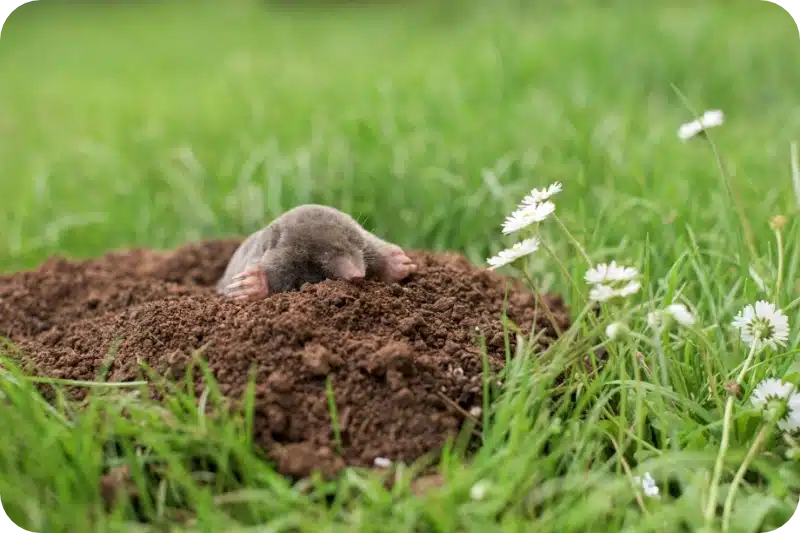
If burrowing damage begins affecting a lawn, contacting pest control for mole removal may be appropriate. In many cases, physical, chemical, or environmental methods can reduce or stop underground activity. Results may not occur immediately, and long term control may require continued management, but effective outcomes are achievable with the correct approach.
Successful control depends on adapting the response to the specific conditions of the property. Trapping may be effective in certain areas, while deterrents or exclusion barriers may be more appropriate elsewhere. Some property owners report reduced activity within several days when intervention occurs early. Other situations require multiple treatments applied over time.
Management is rarely straightforward. These animals do not behave predictably, and a method that works initially may lose effectiveness later. Local knowledge of soil conditions, entry patterns, and seasonal behavior improves the likelihood of success. Determining when to continue with a method and when to adjust strategy is essential.
Many individuals attempt home remedies before seeking assistance, including castor oil mixtures, vibration devices, or other deterrents. These measures may produce limited results. Persistent infestations often require technical assessment and structured intervention to prevent continued tunneling and property damage.
If burrowing damage affects a lawn, contacting pest control for vole removal may be appropriate. Physical, chemical, or environmental methods may reduce or stop underground activity. Results may not occur immediately. Long term control may require continued management. Effective outcomes depend on the correct approach.
Successful control depends on adapting the response to site conditions. Trapping may be effective in certain locations. Deterrents or exclusion barriers may be more appropriate in others. Some property owners observe reduced activity within several days when intervention occurs early. Other cases require multiple treatments over time.
Management is not always straightforward. These animals do not follow consistent patterns. A method that produces results initially may lose effectiveness later. Knowledge of soil conditions, entry patterns, and seasonal behavior improves the likelihood of control. Strategy must be adjusted when conditions change.
Many individuals attempt home remedies before seeking assistance. Castor oil mixtures, vibration devices, and other deterrents are frequently used. Results are often limited. Persistent infestations require technical assessment and structured intervention to prevent continued tunneling and property damage.
Because tunnels follow food sources, grub treatment may reduce repeat activity. Control rarely depends on a single measure. Proper lawn maintenance, controlled irrigation, and targeted intervention may be required together.
Professional treatment methods and service frequency influence overall cost. Property owners seeking estimates should review available pricing guidance to establish realistic expectations.
I once thought a few store-bought repellents would do the trick. They didn’t. That’s when I realized moles aren’t like mice or ants–you can’t just spray something and walk away. If the burrowing keeps going, it’s smart to talk to someone who’s dealt with similar yard intrusions. Even technicians who handle different animals–like these local mice pest control specialists often have insight on wildlife trends and patterns in your region. And sometimes that’s the missing piece.
The most effective way to identify active tunneling is to look for fresh soil mounds or raised ridges, particularly after rainfall. Professionals often compress suspected areas and return after one or two days to determine which sections have been raised again. Reopened tunnels indicate current activity.
Ground firmness may also provide indication. Experienced specialists may distinguish active from inactive areas by the density of the soil. Compact or flattened ground arranged in lines rather than loose mounds may indicate older or abandoned tunnels. Verification through compression and reinspection remains the most reliable method.
Once an active tunnel is confirmed, trap placement usually follows. Success depends on locating the primary run, which is not always obvious. For this reason, technicians often use probes, which are long metal rods inserted into the soil to detect hollow spaces. A slight error in placement can prevent effective detection.
Even experienced technicians may need to test several locations. This is part of the process. Effective control depends on narrowing down activity in a methodical manner and confirming the correct placement before proceeding.
In areas with lower activity, signs may appear and disappear for extended periods. This pattern does not necessarily indicate that burrowing animals have left the property. Feeding activity may shift temporarily to other locations. Effective management in these situations requires repeated inspection and monitored placement of control measures. Observation and adjustment remain essential.
Experience reduces uncertainty, yet the process still depends on patience and careful evaluation. Even trained technicians rely on continued monitoring to confirm active areas before applying control methods.
Other pest issues may present more predictable patterns. Rodent activity within homes, for example, often follows consistent travel routes and nesting behavior. Spider activity is influenced by different environmental conditions and seasonal factors, which affect both presence and treatment approach.
The most direct method involves locating active tunnels and placing traps along them. Professionals select scissor jaw, harpoon, or choker loop traps according to soil conditions and tunnel structure. Identification of active runs is verified by flattening several tunnels and returning later to determine which have been rebuilt. Reopened paths indicate consistent use.
Certain services use carbon monoxide equipment that introduces gas into the tunnel system. This method is contained within the burrow network and does not leave residue on the surface. Effectiveness depends on soil composition. Dense clay or rocky ground may limit gas distribution and reduce performance.
Baits designed to resemble natural food sources, such as worms or grubs, are also used in some cases. These products may contain active ingredients such as bromethalin. Accurate placement is essential. Bait introduced into inactive tunnels will not produce results. Technicians interpret soil patterns and mound formation to identify productive locations for treatment.
Timing and consistency are critical. Moles do not follow predictable daily patterns, and their tunnel systems may extend well beyond visible areas. Effective control depends on early detection and timely intervention before the network expands.
Delaying response allows continued tunneling and further underground expansion. Prompt action improves the likelihood of limiting structural damage to the lawn and surrounding soil.
Most treatment methods target the mole without damaging vegetation or soil structure. Property owners concerned about pets, children, or nearby wildlife should request treatment options designed to minimize risk to non target species. Certain control strategies used for other burrowing animals, including voles, may follow similar principles.
Each control method has advantages and limitations. Conditions that produce results in a maintained urban yard may not perform the same on larger rural properties or in loose, sandy soil. Local experience is valuable because effective solutions depend on site specific conditions rather than general theory.
After activity has been resolved, recurrence remains possible. Preventive measures should address the conditions that attract burrowing animals, including grubs, worms, soft soil, or undisturbed turf. Adjust irrigation practices where necessary and avoid excessive soil softening. Maintaining firmer ground conditions can reduce suitability for tunneling.
Freshly turned soil and compost piles should not be left near lawn areas. These materials attract soil dwelling organisms that serve as food sources. Periodic property inspections help identify early signs of renewed activity and allow timely response. Routine maintenance reduces the likelihood of a larger infestation developing.
Physical barriers may also limit underground movement. Buried wire mesh beneath garden beds or perimeter trenches filled with gravel can slow tunneling. No single method provides complete prevention. Combining several measures produces more reliable results.
Properties in both urban and surrounding communities may experience recurring activity if conditions remain favorable. A structured aftercare plan helps maintain control over time.
Whether maintenance is performed independently or by a service provider, consistency remains essential. Preventive practices limit the likelihood of damage requiring reseeding, irrigation repair, or further lawn restoration. Early prevention reduces the need for corrective intervention later.
Do mole removal services actually stop the digging in my yard?
Yes, targeted treatments from wildlife control companies can significantly reduce or stop mole activity. Once active tunnels are identified, traps or repellents are placed strategically. These measures disrupt the animal’s routine and can help prevent new damage, especially when combined with lawn care changes that reduce the food sources attracting them in the first place.
How long does it take for mole control methods to work?
In most cases, results start showing within a few days to a week after professional intervention. Traps may capture moles quickly, but long-term success often depends on consistent monitoring. Some properties may need follow-up visits if new tunnels appear or if multiple animals are present underground.
Can I use DIY mole control methods instead of hiring a specialist?
Some homeowners try repellents, castor oil treatments, or vibrating stakes, but these approaches often provide short-term relief at best. Professionals have access to tools and methods that are not available in retail stores, such as specialized traps and deeper tunnel detection. For repeated or severe infestations, hiring a service usually produces better results.
Why do moles keep coming back even after treatment?
Recurring mole problems are often caused by favorable soil conditions and abundant food like earthworms and grubs. If the property remains attractive, new moles may migrate in after the first ones are removed. That’s why prevention strategies—like adjusting irrigation, removing turf pests, and keeping soil compacted—are important to stop re-entry.
What kind of traps do professionals use for moles?
Most specialists rely on mechanical traps such as harpoon, scissor-jaw, or choker loop styles. These are placed directly in active tunnels after confirming mole presence. Unlike surface-level deterrents, these tools physically intercept the animal underground, offering a more reliable way to stop damage to your lawn.
How do professional services deal with underground animals that cause damage to lawns?
Specialized companies use a variety of techniques to manage these animals, including identifying their active tunnels through careful inspection, then applying targeted methods such as trapping or using deterrents that do not harm other wildlife. Their approach often involves monitoring the area closely and applying treatments that reduce the population or encourage the animals to relocate, minimizing damage to your yard over time.