
Many licensed technicians rely on targeted formulations designed to eliminate specific pests without overexposing homes to unnecessary chemicals. For example, gel baits with slow-acting agents are placed behind appliances where roaches gather. It does not immediately resolve the problem, which is the purpose. A roach returns to its colony, spreads the substance, and gradually diminishes the population.
Insect growth regulators (IGRs) are another common choice, especially for dealing with ants, fleas, or stored-product insects. They do not immediately exterminate pests, but interfere with reproduction and development stages. A client claimed they were unaware of this approach until their neighbor informed them of their experience with tiny moths in their pantry. They claimed a technician used a low-odor aerosol containing an IGR which cleared the issue within weeks, quietly and thoroughly.
For larger animals or birds, mechanical strategies prove to be very effective. It might be one-way doors for squirrels, or discreet netting and spikes to deter pigeons. There are many methods for vertebrate management which does not involve poison. This might be a surprise, as most believe traps are always involved. However, pest control specialists avoid them unless absolutely necessary.
Sprays are widely applied in certain cases, but only after a thorough assessment. Many professionals in Calgary follow Integrated Management protocols, meaning they will not simply begin spraying at the first as soon as they notice an problem. They carefully identify entry points, nesting sites, and moisture problems. For various instances, the solution is sealing an area or a tweak to outdoor lighting. This may seem mundane, but it proves to be very effective long-term.
If you are wondering how specialists deal with pests, they turn to a mix of treatments rather than one solution. Most situations do not require extreme measures immediately, as a targeted approach is more efficient.
Professionals begin with low-toxicity options, especially in homes with kids or pets. This includes physical barriers, traps, and baits. For example, gel-based formulations are popular for managing crawling insects like ants or cockroaches. They are discreet, do not smell, and do not require evacuation.
In more persistent cases, they will bring in regulated chemical agents, such as pyrethroids, neonicotinoids, or insect growth regulators (IGRs). Each have a specific role: one interrupts reproduction cycles, another targets the nervous system. Some of them target prevention in addition to elimination.
For rodents, the strategy shifts as methods do not simply comprise of putting down traps and hope the problem will resolve. The technician will asses entry points, such as gaps, vents, and garages. Then, they apply a combination of snap traps, tamper-proof bait stations, and sometimes ultrasonic deterrents. Though selective, poison baits can be applied as well.
Outdoors, technicians may treat soil, perimeter foundations, or vegetation using granular applications or liquid sprays. These products have residual action, meaning they remain active for weeks or months, depending on weather and exposure.
Some firms, like The Pest Control Guy in Calgary, use thermal or steam-based solutions for bed bug infestations, especially when chemicals alone are proving to be ineffective. It is not cheap, but is thorough and efficient.
After the treatment, there is documentation. Most reputable teams log every product, treated area, and every result. This is not done for compliance, but to more easily identify patterns to foster an insightful and effective guide for future prevention.
If you picture a technician to address the problem with a can of spray and leave, this is not the case. It is about inspection, planning, and precision to effectively identify and resolve the problem in the most efficient and rapid method.
For homes struggling with recurring pests like ants, cockroaches, or silverfish, targeted chemical applications is an excellent method. Professionals choose products that stay active for longer periods, such as residual sprays, baits, or dusts which take effect in non-visible places without the need for constant reapplication.
In living areas, pyrethroid-based sprays are generally applied. These are not chosen at random, but are less likely to trigger strong odors or stains, as they are considered safe when correctly used. However, technicians do not apply near pet bedding or food areas without understanding the exact type of treatment. Some technicians prefer gel baits, especially in kitchens, since they can be applied in discreet cracks and do not spread residue across surfaces.
For more complex cases, like colonies of carpenter ants or bed bugs hiding in baseboards, dust formulations are often used. These can be blown deep into wall voids or under floors, where sprays would not reach. It is more surgical, but more strategic. There have been cases where a homeowner believed the area was clear, but activity returned within weeks. The wrong type of product had been applied in the wrong area.
Dealing with rodents indoors often brings a different category of substances into play. Tamper-resistant bait stations are common, but they need to be placed with care, especially if children or pets are around. If you are dealing with mice in particular, a trusted mice control team will pinpoint entry points and recommend both chemical and non-chemical strategies that remains effective long-term.
In some cases, it is not about insects or rodents at all. If you are wondering whether something more niche, like bees tunnelling into your walls can be solved the same way, they are not dealt with in the way you think. There are safer approaches for pollinators. Here is an example: can pest control get rid of carpenter bees? They are dealt with in a similar way, but not with the same approach you would take for a more invasive species like cockroaches.
Ultimately, what is sprayed, baited, or dusted indoors should always match the exact problem. There is no universal solution, and there is no point in flooding a house with chemicals if the cause is not clear. It is advised to ask useful questions prior to the application.
Thermal imaging cameras are often the first tools pulled out of the truck. It locates heat signatures from rodents hiding behind walls or under floorboards. It is surprising how much activity occurs in areas you do not think to look. This approach is excellent for spotting hidden nests without tearing apart the home.
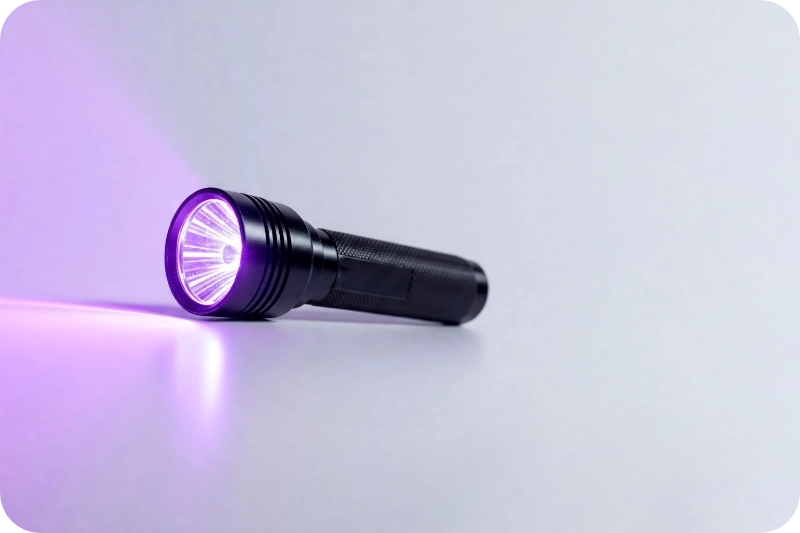
For insects like ants or cockroaches, UV flashlights and pheromone traps are standard gear. The UV light reveals traces of activity, like urine trails or droppings, that are otherwise invisible. Once those hotspots are identified, bait stations or gels are placed strategically. It is not always about killing on contact. Often, the goal is to spread the treatment to the entire colony.
In homes with a mouse problem, acoustic sensors and motion detectors come are used. They pick up on subtle movements or sounds, especially during the night. You may not hear them, but the equipment does. If you are wondering whether this approach is truly effective, or you are wondering if you can get rid of mice without pest control, that is where precision tools prove their value.
Inspection mirrors and telescoping scopes are common for checking behind appliances, inside vents, or under porches. They are not glamorous, but necessary. These tight spots are often where activity starts. Once the evidence is found, like chewed wires or droppings, it is easier to decide whether to use bait, traps, or exclusion materials.
Various specialists carry portable foggers or aerosol injectors with them. These are not for regular use, but it comes in handy when targeting wasps in wall cavities or carpenter ants in structural voids. Nevertheless, if treatment involves foggers or sprays, many ask whether they need to perform a full cleanup after, as it is addressed on this blog: should I clean the house after pest control.
All this gear is required to be used under the right circumstances. That is why technicians track activity patterns, usually over a few visits. If you are wondering how frequent pest control visits, it depends on what is being monitored and how quickly the situation shifts.
In the case of mice, once you have them mapped out, it is a balance of blocking access and reducing the population. If you are dealing with that kind of problem, learn more on this article, as it explains how mice problems are approached, which include more than just bait stations: expert mice pest control.
There is no universal tool which resolves the problem. Methods consist of layering the right tools, in the right places, paired patience. Occasionally, a flashlight and a notepad are as valuable as a sensor or trap.
Technicians choose which method to use not by preference, but by context. For instance, if rodents are active but not visible, discreet bait stations are used, especially in family homes where safety is of high importance. That is where safe Calgary rodent control is a major contributing factor. There is no use of unnecessary spraying where no treatment is landing.
Sprays can be used when there is a clear infestation zone. If insects are concentrated in corners, baseboards, or along entry points, a localized application, such as spot treatments, stop the issue from spreading. However, many specialists hesitate with sprays indoors unless absolutely necessary, mostly because of lingering residue and odor complaints from homeowners.
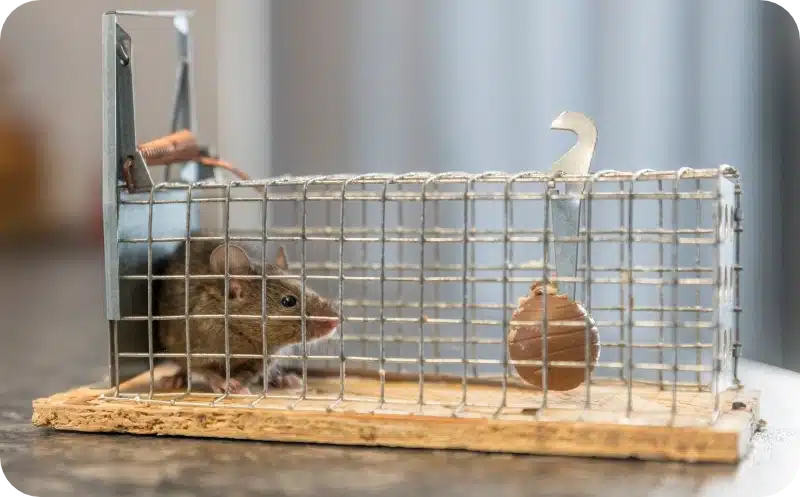
Traps are chosen when observation is part of the strategy. They are practical for confirming activity or narrowing down hotspots. For example, if you are unsure whether mice are in the pantry or behind the fridge, setting a few snap traps gives quick feedback. Sometimes it is not about eliminating but learning. That is where seasoned judgment is of high importance. You will notice that experienced Calgary exterminators do not rush that decision.
Each method has its own limits. Sprays may scatter insects into deeper voids. Traps do not scale efficient enough for larger infestations. Baits may take time to see results and can be ignored if there is other food around. There is always a bit of balancing, and some trial and error. Nevertheless, experienced crews do not default to one method, they weigh the layout, severity, and species involved. Technicians begin by clarifying the basics with clients, which can simply be explaining what pest control is. This fosters an understanding for people to recognize why one method is being used over another.
Do professionals always use chemicals, or are there safer alternatives?
Not all services rely on chemicals. Many providers now offer integrated approaches that include traps, exclusion methods, and targeted baiting systems. For example, for rodents, a company might suggest sealing entry points and placing tamper-proof bait stations rather than spraying toxins. In sensitive environments like homes with pets or children, they often recommend lower-toxicity options or mechanical methods first.
How do specialists choose between sprays, baits, and traps?
Selection depends on the type of infestation, location, and level of activity. Baits are commonly used for ants and cockroaches, as they carry the poison back to the colony. Sprays might be chosen for visible activity, especially along baseboards or entryways. Traps, such as glue boards or snap traps, are often used for mice or insects in monitoring phases. Professionals assess the situation during an inspection and usually combine several methods for best results.
Are the tools used indoors different from those used outside?
Yes, tools and products vary significantly depending on whether the treatment is indoors or outdoors. Inside, you will often see gel baits, dust formulations, and crack-and-crevice applicators to minimize exposure. Outside, companies may apply perimeter granules, barrier sprays, or use rodent bait stations. Equipment like backpack sprayers or power sprayers are more common for external treatments where coverage needs to be broader.
Can I request that only non-toxic methods be used?
Absolutely. Many providers offer eco-friendly or low-impact services upon request. These might include physical barriers, vacuuming pests, using food-grade diatomaceous earth, or introducing beneficial organisms like nematodes. It’s best to mention any allergies, pets, or environmental concerns during your initial consultation so the technician can tailor the strategy accordingly.
Do different insects require completely different treatment methods?
Yes, each species has its own behavior and vulnerabilities. For example, bed bugs are usually treated with heat or specialized residual sprays, while ants respond better to slow-acting baits. Wasps may require direct nest treatments, and termites often need soil-applied termiticides or bait systems installed around the foundation. This is why inspections are such a key part of the process — they help determine what combination of methods will be most successful.
How do professionals decide which treatment method to apply for an insect problem?
Technicians evaluate the type of insect, its life cycle, and where it nests or feeds. They also consider the environment of the affected area, whether it is indoors or outdoors, the level of infestation, and any safety concerns for people or pets nearby. Based on these factors, they select an approach such as baits, sprays, or traps to target the insects precisely and reduce their numbers with minimal disruption.
Are there non-chemical options used to manage unwanted critters?
Yes, specialists often use physical barriers, traps, and devices that detect the presence of critters without relying on chemicals. These methods include sticky traps, electronic monitors, and exclusion techniques like sealing entry points. Such strategies can be combined with targeted treatments for a balanced approach that lowers the need for harsh substances, especially in sensitive environments like homes with children or pets.